

Germ Science Experiment for Kids: Grow Real Germs With Booger Kit®
- Updated: November 7, 2026
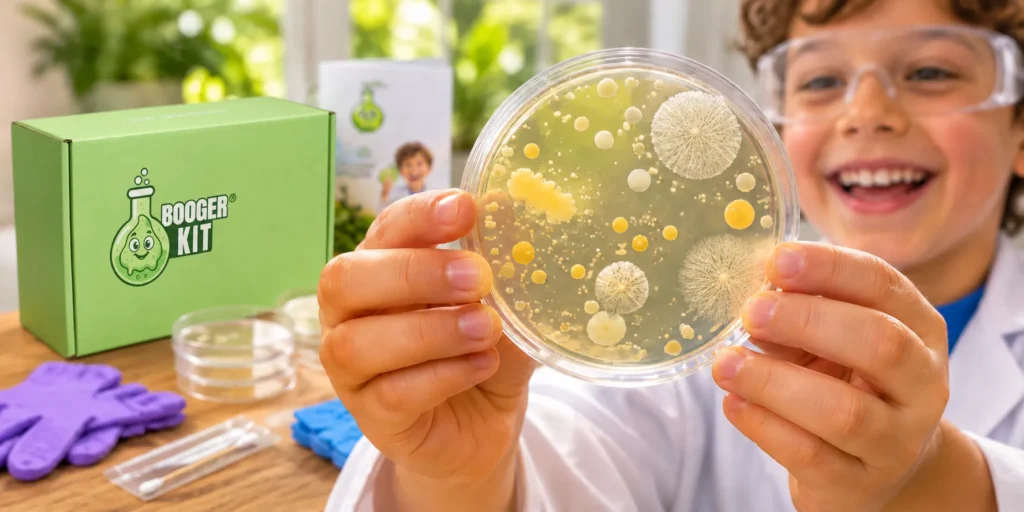
Every parent has said it a thousand times: “Stop picking your nose.” “Wash your hands.” Kids nod, and two minutes later the finger is right back where it started. The problem isn’t that kids don’t listen. It’s that germs are invisible, and it’s hard to care about something you can’t see.
That’s where a germ science experiment comes in. When kids watch microbes grow, the lesson stops being a rule and starts being something they discovered themselves.
Germ Science Experiments at a Glance
| Experiment | What Kids Learn | Grows Real Germs? | Time | Supplies |
|---|---|---|---|---|
| Glitter hands | How germs spread by touch | No | About 5 minutes | Lotion, glitter |
| Bread in sealed bags | Mold grows on bread handled different ways | Yes | About 3 to 4 weeks | Bread, zip-top bags |
| Booger Kit | What lives in their own nose, made visible | Yes | Usually 2 to 4 days to first growth | Everything included |
Why Families Choose Booger Kit for Germ Science
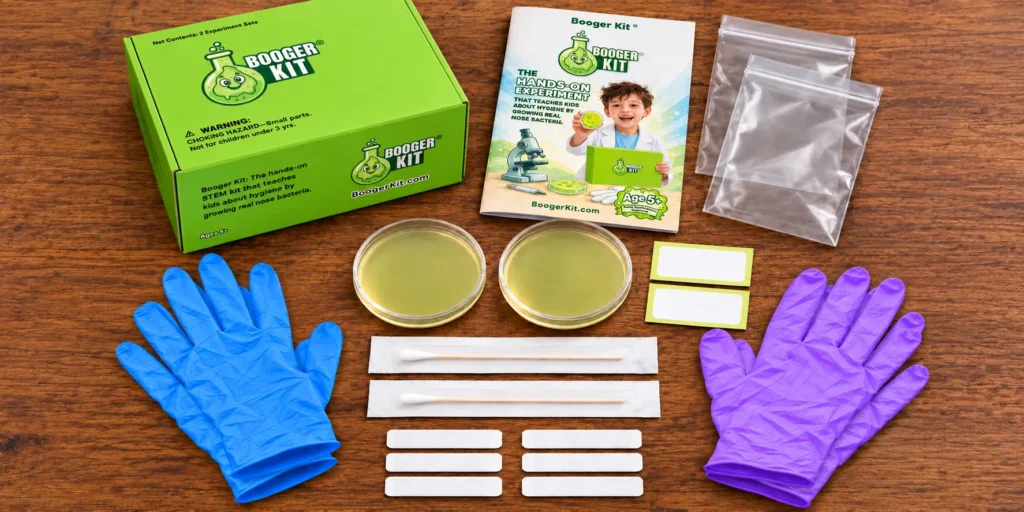
Booger Kit is a germ science experiment built for busy families:
- Everything is in the box. The petri dishes come pre-poured with agar, so there is nothing to mix, pour, or track down.
- Results come fast. Growth usually shows up in 2 to 4 days, not weeks.
- It is personal. The sample comes from your child’s own nose, so the lesson sticks.
- The dish stays sealed. An adult handles the swab and the disposal, and the dish stays sealed from start to finish.
How to Do the Booger Kit Germ Science Experiment in 5 Steps
- Swab: An adult gently swabs just inside your child’s nose with a sterile swab.
- Streak: Your child streaks the swab across the agar in the petri dish.
- Seal: The dish is sealed with three fastening strips and labeled.
- Watch: Growth usually shows up in 2 to 4 days. The first day you see visible spots counts as Growth Day 1, and your child can observe and record changes for up to 10 Growth Days.
- Dispose: An adult disposes of the sealed dish no later than 14 days after sealing, even if your child hasn’t reached Growth Day 10.
Always follow the instruction booklet in your kit. When the colonies appear, share your kid’s plate in the Booger Gallery and see what everyone else grew.
The Science Behind the "Ew": What Grows on the Dish
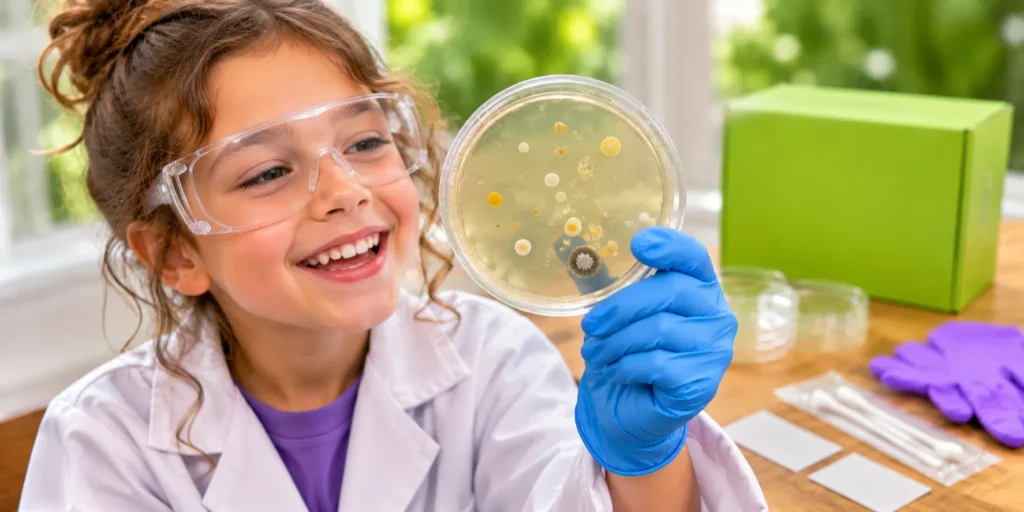
A petri dish holds agar, a jelly loaded with nutrients that bacteria and fungi love. One microbe is far too small to see. But give it food and a few days, and it multiplies into a colony of millions that shows up as dots, smears, and fuzzy patches in different colors and shapes.
Don’t panic about what you see. Lots of microbes normally live in and on our bodies, including inside the nose, and most of them cause no harm. The dish shows that microbes are there. It doesn’t identify which ones grew, and it can’t tell you whether anyone is sick.
So why keep fingers out of noses? In a 2006 study published in Infection Control & Hospital Epidemiology, researchers found that people who picked their noses were more likely to carry Staphylococcus aureus in their noses than people who didn’t. The study found an association, rather than proving that nose picking caused the increased carriage. The researchers suggested that breaking the habit may help reduce that carriage. And picking can move what lives in the nose onto fingers, and from there onto toys, snacks, and couch cushions. Read more about the science behind Booger Kit and where germs from picking your nose can end up around the house.
Why Seeing Germs Helps Kids Remember
In 2019, educators at Discovery Elementary School in Idaho Falls, Idaho, ran a bread experiment that went viral: slices touched by unwashed hands and rubbed on classroom laptops grew heavy mold, while the slice touched after washing with soap and water stayed mostly clean. The teachers said their students were grossed out and took handwashing far more seriously afterward.
Booger Kit brings that same “I saw it with my own eyes” moment home, aimed right at the habit you’re trying to break. For more strategies, read how to get your kid to stop picking their nose.
Keep a Germ Growth Observation Log (Science Fair Ready)
Turn the germ science experiment into real science practice:
- Question: What grows from inside my nose?
- Prediction: Before you swab, guess how many colonies will grow and what colors they’ll be.
- Observations: Photograph the sealed dish at the same time every day, labeled by Growth Day, and write down what changed.
- Wrap-up: Compare your photos to your prediction. What surprised you?
Science fair coming up? A week of plate photos and your log make one gross-awesome display board.
Germ Science Experiment FAQ
What is a good germ experiment for kids?
A good germ science experiment makes an invisible concept easier to understand. Glitter demonstrates transfer by touch, while bread and agar dishes let kids observe microbial growth. Booger Kit usually shows growth in 2 to 4 days, includes everything you need, and has an adult handle the swab and disposal.
Is what grows in the dish dangerous?
The dish does not identify what grew, so treat the contents as potentially harmful. Once sealed, keep it sealed throughout observation and disposal. Follow the instruction booklet, and have an adult dispose of it no later than 14 days after sealing.
How long does the Booger Kit germ science experiment take?
Growth usually appears in 2 to 4 days. The first day with visible spots is Growth Day 1. Kids can observe for up to 10 Growth Days or until 14 days after sealing, whichever comes first. Then an adult disposes of the sealed dish.
What age is Booger Kit for?
Booger Kit is designed for kids ages 5 and up, with an adult doing the nasal swab and the disposal.
What comes in the kit?
Two petri dishes, sterile swabs, kid and adult gloves, dish labels, fastening strips, disposal bags, and a step-by-step instruction booklet.
Can a germ science experiment help my kid stop picking their nose?
Booger Kit is designed to help kids stop picking their nose by showing them what lives there. Instead of another lecture, the “why” comes from what they see with their own eyes.
The Bottom Line
Kids learn best when they discover things themselves. With the Booger Kit germ science experiment, they grow real microbes from their own nose, watch them appear, and finally see why “stop picking your nose” is more than a rule.
Sources
- ScienceAlert. “This Simple Experiment With Bread Is a Genius Way to Get Kids to Wash Their Hands.” (Discovery Elementary, Idaho Falls, 2019)
- Wertheim HFL, et al. “Nose Picking and Nasal Carriage of Staphylococcus aureus.” Infection Control & Hospital Epidemiology. 2006;27(8):863-867.