QUICK ANSWER
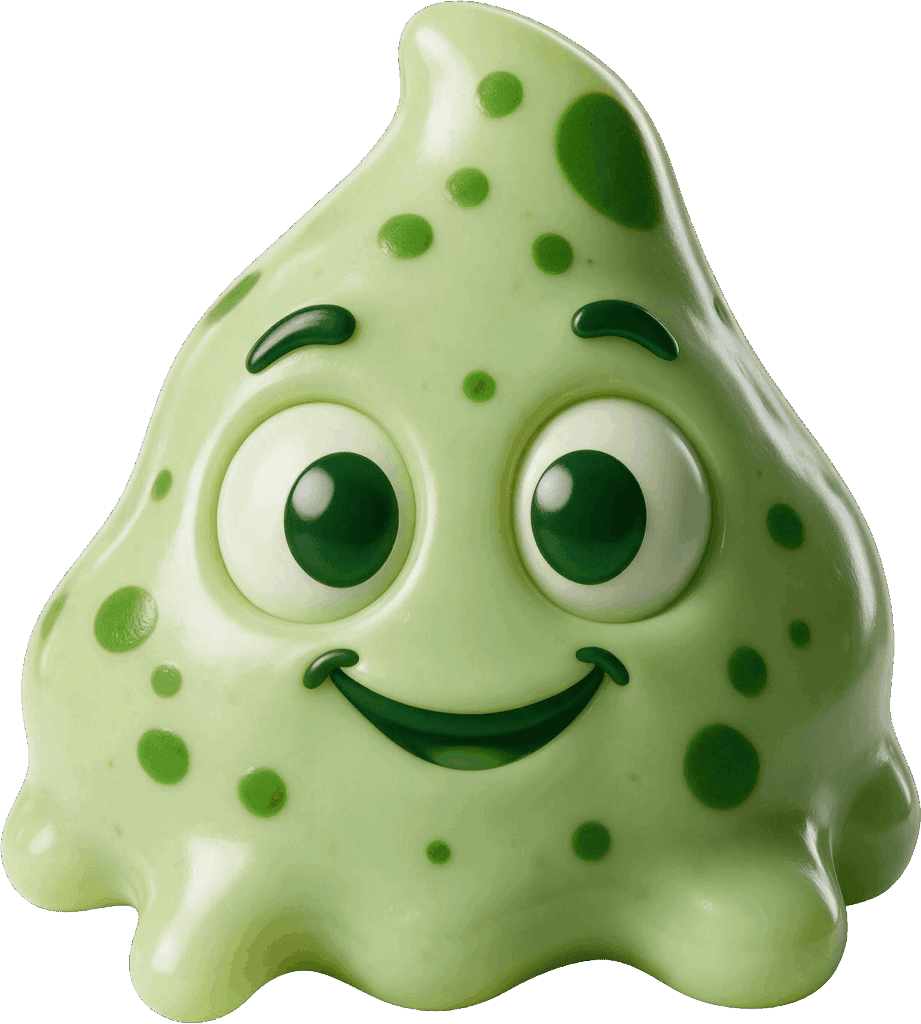
Yes. Boogers contain protein. A booger is dried nasal mucus, and fresh mucus is roughly 95% water. The remaining material includes salts, cells, trapped particles, and protective proteins and peptides such as mucins, lysozyme, lactoferrin, defensins, and IgA antibodies. These are part of the immune system’s first line of defense, not a meaningful source of nutrition.
The Short Answer
How Much Protein Is in a Booger?
TRY THIS!
Hold a single almond in your hand. That one almond has more protein in it than every booger your child will make in their entire life. Now nobody has to wonder whether boogers count as a snack.
The 5 Proteins Inside Every Booger

1. Mucins
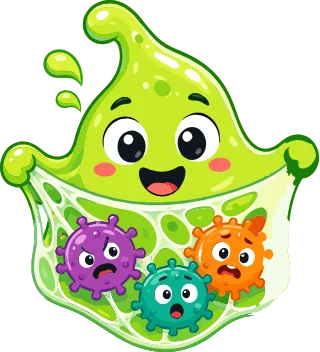
Mucins are the reason a booger stretches.
These are large, sticky proteins that give mucus its gel-like texture. They are what makes a booger pull like a tiny piece of slime instead of running off like water. Without mucins, mucus would be a puddle, and a puddle cannot catch anything.
Kid version: mucins are the glue in the spiderweb.
2. Lysozyme
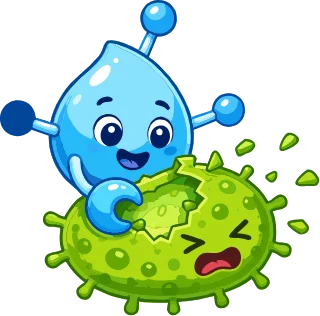
Lysozyme is an enzyme that breaks down the outer wall of bacteria.
Bacteria are held together by a tough outer layer. Lysozyme cuts that layer apart, which can weaken or rupture the bacterium and make it easier for the rest of the immune system to eliminate. It is not unique to your nose, either. Lysozyme shows up in tears and saliva too, which is part of why your body handles minor germ exposure so quietly.
Kid version: lysozyme is a tiny ninja that slices germs open.

3. Lactoferrin
Lactoferrin does not attack bacteria. It starves them.
Bacteria need iron to grow and reproduce. Lactoferrin grabs the available iron and holds onto it, so the bacteria cannot get any. No iron, no growth. It is a siege instead of a fight.
Kid version: lactoferrin steals the germ’s lunch money.
4. Defensins
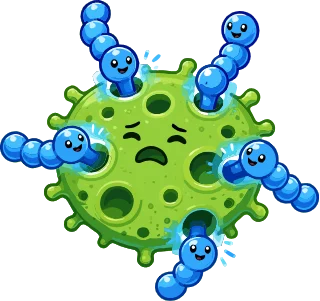
Defensins are short antimicrobial proteins that punch holes straight through a germ’s outer membrane.
Once a membrane is breached, the germ leaks and dies. Defensins act fast and are built to handle a wide range of invaders.
Kid version: defensins are the tiny boxers.
5. IgA Antibodies
IgA, short for immunoglobulin A, is the antibody your body stations at every surface where the outside world gets in. Nose, mouth, gut, lungs. IgA grabs germs and neutralizes them before they can attach to your cells. It is on duty in your nasal mucus at all times, waiting for something to show up.
Kid version: IgA is the security guard at the front door.
Why Your Nose Bothers Putting Protein in Mucus at All
A sticky trap on its own would be a decent design. Catch the dust, catch the pollen, done.
The problem is that a trap does not kill anything. Bacteria caught in plain sticky goo would sit there and multiply, and your nose would turn into an incubator instead of a filter.
So the proteins are the difference between catching germs and dealing with them. Mucins hold the germ in place. Lactoferrin cuts off its food supply. Lysozyme and defensins break it apart. IgA flags and neutralizes it. By the time a booger dries out, most of what got caught in it has already lost.
That is why we tell parents boogers are a sign the system is working. A booger is a receipt.
DID YOU KNOW?
Lysozyme was discovered by accident in 1921, when Alexander Fleming’s own nasal mucus dripped onto a bacterial culture plate and killed the bacteria growing there. The same scientist went on to discover penicillin seven years later.
Is the Protein in Boogers Good for You?
Here is where the confusion comes from. There is a claim that circulates online saying that eating boogers boosts your immune system, on the logic that you are exposing yourself to germs and immune proteins at the same time. It sounds plausible, which is why it spreads.
What we actually know is thinner than that. The claim traces back to a researcher floating an idea, not to a clinical study. Nobody has run the trial. It is a hypothesis that went viral and now gets repeated as if it were a finding.
What is well established is the downside. Nose picking moves bacteria from inside the nose onto hands and fingernails, and from there onto everything the child touches next. It also scratches delicate nasal tissue, which causes nosebleeds and gives germs an easier way in.
So the practical answer for parents: the protein is real, the immunity claim is not proven, and the germ transfer is. Tissue instead of finger, every time.
Booger Protein Versus Food Protein
Same word, completely different category. This is the part kids find genuinely funny, and it is also the part that settles the argument.
| Category | Food Protein | Booger Protein |
|---|---|---|
| Its job | Builds muscle, skin, hair, and enzymes | Catches and kills germs |
| Where it ends up | Digested and absorbed by your body | Trapped in a booger with whatever it caught |
| Its purpose | Nutrition and fuel | Immune defense |
| Meant to be eaten | Yes | No |
| Best comparison | The protein in a chicken breast | The protein in a used air filter |
Food protein is fuel. Booger protein is equipment. It was manufactured for a specific job, deployed to a specific location, and by the time it is sitting in a booger it has usually already been used.
These Proteins Work Every Second of Every Day. Now Let Your Child See the Germs They Fight.
Booger Kit: The hands-on science experiment that helps get kids to stop picking their nose.
Frequently Asked Questions
Do boogers have protein?
Yes. Boogers contain protein. A booger is dried nasal mucus, and fresh mucus is roughly 95% water. The remaining material includes salts, cells, trapped particles, and protective proteins and peptides such as mucins, lysozyme, lactoferrin, defensins, and IgA antibodies. These are part of the immune system’s first line of defense, not a meaningful source of nutrition.
How much protein is in a booger?
What proteins are found in nasal mucus?
Nasal mucus contains mucins, antibodies, enzymes, and antimicrobial proteins and peptides. Mucins create its gel-like texture, lysozyme damages the cell walls of certain bacteria, lactoferrin limits the iron available to microbes, defensins attack microbial membranes, and immunoglobulin A helps prevent pathogens from attaching to cells.
What are mucins?
Mucins are large, sugar-coated proteins that give mucus its stretchy, gel-like texture. They are the reason a booger pulls like slime instead of running like water. That thickness is what allows mucus to trap dust, pollen, bacteria, and viruses before they reach the lungs.
What does lysozyme do in your nose?
Lysozyme is an antimicrobial enzyme that damages the cell walls of certain bacteria. That damage can weaken or rupture susceptible bacteria and make them easier for other immune defenses to eliminate. Lysozyme is also found in tears and saliva, where it does the same protective work.
Is the protein in boogers good for you?
Not in any nutritional sense. The proteins in nasal mucus are defensive tools, and in a dried booger they are mixed with the microbes, dust, pollen, and other material the mucus captured. The claim that eating boogers boosts immunity traces back to an untested hypothesis, not to clinical research.
Can you eat boogers for protein?
Why do animals eat their boogers?
Nose picking, including eating what is found, has been observed in some primates, including chimpanzees, gorillas, and lemurs. Scientists do not know whether the behavior serves a biological purpose or is simply grooming, exploration, or habit. Claims that it provides an immune benefit remain unproven.
Do boogers have more protein when you are sick?
Possibly. During an infection or allergic inflammation, nasal mucus can contain more immune cells, antibodies, and enzymes, which changes its composition. That does not mean any individual booger holds measurably more protein. Thickness and color can also shift from dehydration, allergies, dust, or slower mucus movement, so color alone is not a reliable sign of infection.
Are the proteins in boogers alive?
No. Proteins are molecules, not living things. They can do specific jobs, such as damaging certain bacterial cell walls or binding iron that microbes need, but they do not eat, grow, or reproduce. A booger can contain living bacteria, along with viruses, dead cells, dust, and pollen trapped by the mucus.
What makes boogers stretchy and sticky?
Mucins. These are large molecules coated in sugars that link together with water to form a slippery gel. That gel is what catches particles floating in the air. As nasal mucus loses water and dries near the nostril, the gel becomes thicker, stickier, and eventually solid enough to call a booger.
Does drinking water change the protein in your mucus?
Drinking water does not normally change the main types of proteins in nasal mucus, but hydration affects its consistency. When you are well hydrated, mucus tends to stay thinner and moves more easily. When you are dehydrated, it can become thicker and more likely to dry into stubborn boogers.
About the Author
Sean Stafford is the founder of Booger Kit, a hands-on STEM science kit that helps kids understand germs by letting them grow bacteria from their own nose swab in a sealed petri dish. He built it after realizing that telling a child about germs does not work nearly as well as letting them see one. Booger Kit is based in Louisville, Kentucky.
Sources
- Cole AM et al., “Innate Antimicrobial Activity of Nasal Secretions,” Infection and Immunity, 1999
- “Nasal Mucus Proteome and Its Involvement in Allergic Rhinitis,” Expert Review of Proteomics
- Raphael GD et al., “Lactoferrin and Lysozyme in Nasal Secretions,” Journal of Clinical Investigation, 1989
- Lee SH et al., “Antimicrobial Defensin Peptides of the Human Nasal Mucosa,” Annals of Otology, Rhinology and Laryngology, 2002
- Corthesy B, “Multi-Faceted Functions of Secretory IgA at Mucosal Surfaces,” Frontiers in Immunology, 2013
- Wertheim HFL et al., “Nose Picking and Nasal Carriage of Staphylococcus aureus,” Infection Control and Hospital Epidemiology, 2006
- MIT School of Engineering, “Why Do Our Bodies Make Boogers?”